Bring Montessori-inspired learning into everyday life with simple activities that encourage independence, concentration, coordination, curiosity, and a sense of order in young children.
Young children learn constantly. Pouring their own water, sorting objects, investigating something they found outside, or figuring out how two pieces fit together can all become meaningful learning experiences.
This idea is central to the Montessori approach and the method encourages children to learn through hands-on experiences, purposeful movement, repetition, and increasing independence.
Families don't need to recreate a Montessori classroom to introduce these ideas at home. With a few everyday objects and some thoughtful opportunities to explore, parents can create experiences that allow children to practice important early skills at their own pace.
Why Try Montessori-Inspired Learning at Home?
Montessori learning encourages children to be active participants rather than simply receiving instructions from an adult. Children are given opportunities to explore, make choices, repeat tasks, solve problems, and gradually accomplish more independently.
At home, this approach can support several areas of early development, including:
- Independence and self-confidence
- Fine and gross motor development
- Concentration and attention
- Language and early math skills
- Problem-solving and critical thinking
- Sensory awareness
- Curiosity and enthusiasm for learning
- A sense of order and organization
Here are some Montessori-inspired activities that can easily become part of life at home.
1. Explore Different Textures
Children discover about their environment through touch. A simple sensory activity can encourage them to notice and describe differences between materials.
Gather a few safe objects with noticeably different textures. You might include a soft piece of fabric, a smooth stone, a textured sponge, or a wooden object.
Invite your child to investigate each item. Instead of telling them what they should notice, encourage conversation with questions such as, "What does this remind you of?" or "Which one feels the smoothest?"
Introducing words such as rough, smooth, soft, hard, and bumpy can also help connect sensory experiences with language.
Learning opportunities: Sensory awareness, descriptive vocabulary, comparison, and fine motor exploration.
2. Match Real Objects With Pictures
Object-to-picture matching is an easy way to combine language development with visual recognition. Choose several familiar objects, such as a toy animal, spoon, cup, block, or small ball. Find or create pictures that represent each object.
Place the pictures where your child can see them and demonstrate matching one real object with its picture. Then invite your child to find the remaining matches. Talk about the objects as your child works. You can name them, describe what they're used for, or discuss where they might be found.
Learning opportunities: Vocabulary, visual discrimination, categorization, and concentration.
3. Introduce Counting With Everyday Objects
Early math becomes more meaningful when children can physically see and move the quantities they are counting. Gather several safe objects such as blocks, large shells, stones, or wooden pieces. Place a few number cards nearby and help your child match each numeral with the corresponding quantity.
For example, beside the number three, your child can place three objects while counting each one aloud. Start with small numbers and gradually increase the challenge as your child's understanding develops.
Learning opportunities: Counting, quantity recognition, number concepts, and one-to-one correspondence.
4. Strengthen Little Hands With Clips
Everyday objects that require pinching and gripping can help children develop the small muscles in their hands and fingers.
Provide a bowl or sturdy container along with several easy-to-use clips. Demonstrate how to open one and attach it to the edge of the container. Children can clip them all around the bowl and then remove them before repeating the activity.
Because the movement requires controlled pressure from the fingers, it can help develop some of the hand strength and coordination children will later use for tasks such as drawing and writing.
Learning opportunities: Fine motor strength, coordination, concentration, and dexterity.
5. Turn a Nature Walk Into a Learning Experience
Outdoor exploration offers endless opportunities for children to observe, compare, and ask questions.
Bring a small basket on your next walk and invite your child to look for safe natural objects that have fallen to the ground, such as leaves, stones, pinecones, or twigs. Be mindful of local rules and avoid picking living plants where collecting isn't permitted.
Once you're home, examine the collection together. Children can arrange objects according to characteristics such as size, shape, texture, or color. You can also encourage observation by talking about similarities and differences between the objects.
Learning opportunities: Observation, classification, sensory exploration, language, and connection with nature.
6. Make a Simple Shape-Matching Activity
Cut several large, simple shapes from sturdy paper or cardboard and trace their outlines onto another piece of paper. Invite your child to determine which piece belongs on each outline.
Begin with clearly different shapes, such as a circle, triangle, and square. As the activity becomes easier, introduce additional shapes or pieces in different sizes.
Allow your child time to rotate and reposition pieces while searching for a match. The process of figuring it out is an important part of the learning.
Learning opportunities: Spatial reasoning, shape recognition, problem-solving, and fine motor control.
7. Practice Threading and Creating Patterns
Threading activities require children to coordinate small, precise movements while maintaining their attention.
Depending on your child's age and developmental stage, provide a thick shoelace or string along with large, age-appropriate beads or pasta with wide openings. Demonstrate how to guide one piece onto the string and then allow your child to continue.
As children become comfortable with threading, introduce simple patterns using different colors or shapes. Because small objects can present a choking hazard, choose materials appropriate for your child's age and supervise the activity closely.
Learning opportunities: Hand-eye coordination, fine motor development, concentration, sequencing, and pattern recognition.
8. Sort Objects Into Groups
Sorting gives children a hands-on introduction to noticing attributes and understanding how objects can be grouped.
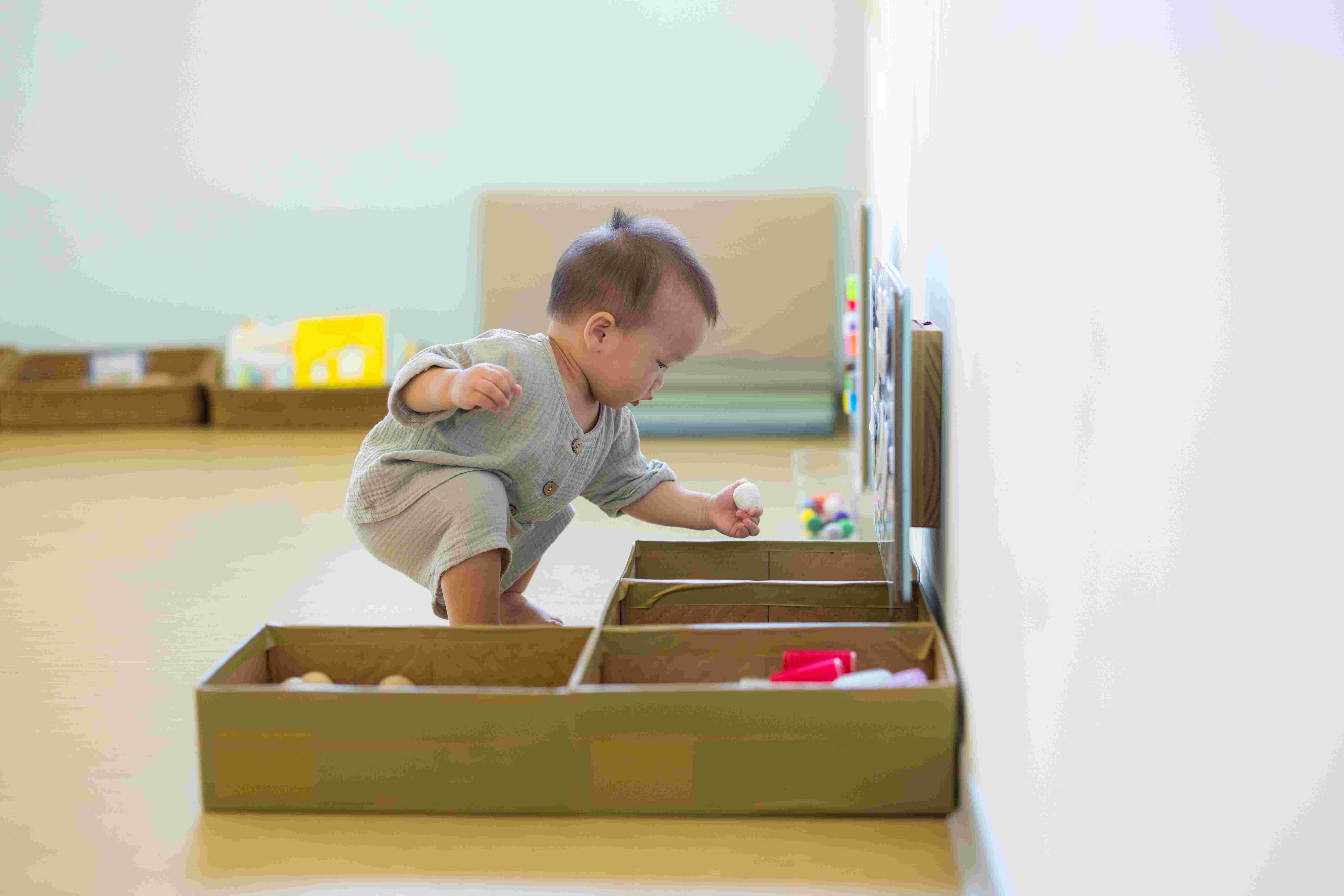
Instead of relying only on buttons, use whatever safe items you already have available. Large craft materials, blocks, toy animals, colored lids, or other child-safe objects can work well. Invite your child to sort the collection into bowls or sections of a tray. One day they might organize objects by color; another time they could sort by size, shape, or type.
For children who are ready for an additional challenge, count the objects in each group and compare which group has more or fewer.
Learning opportunities: Classification, visual discrimination, early math concepts, and logical thinking.
9. Play a Guessing Game Using Touch
A mystery bag turns sensory exploration into a simple guessing game. Place several familiar, child-safe objects inside an opaque cloth bag. Without looking inside, invite your child to reach in and explore one object using only their hands.
Encourage them to think about what they notice.
- Is the object round?
- Does it have corners?
- Is it smooth or textured?
After making a guess, they can pull out the object and see whether they were right. The goal isn't to guess correctly every time. Describing, comparing, and thinking through the possibilities are valuable parts of the experience.
Learning opportunities: Tactile awareness, memory, vocabulary, reasoning, and descriptive language.
Setting Up Your Home to Encourage Independence
Activities are only one part of bringing Montessori principles into family life. The way a child's environment is arranged can also influence how independently they are able to participate. Look at your home from your child's perspective. Are there everyday things they could safely access without asking an adult each time?
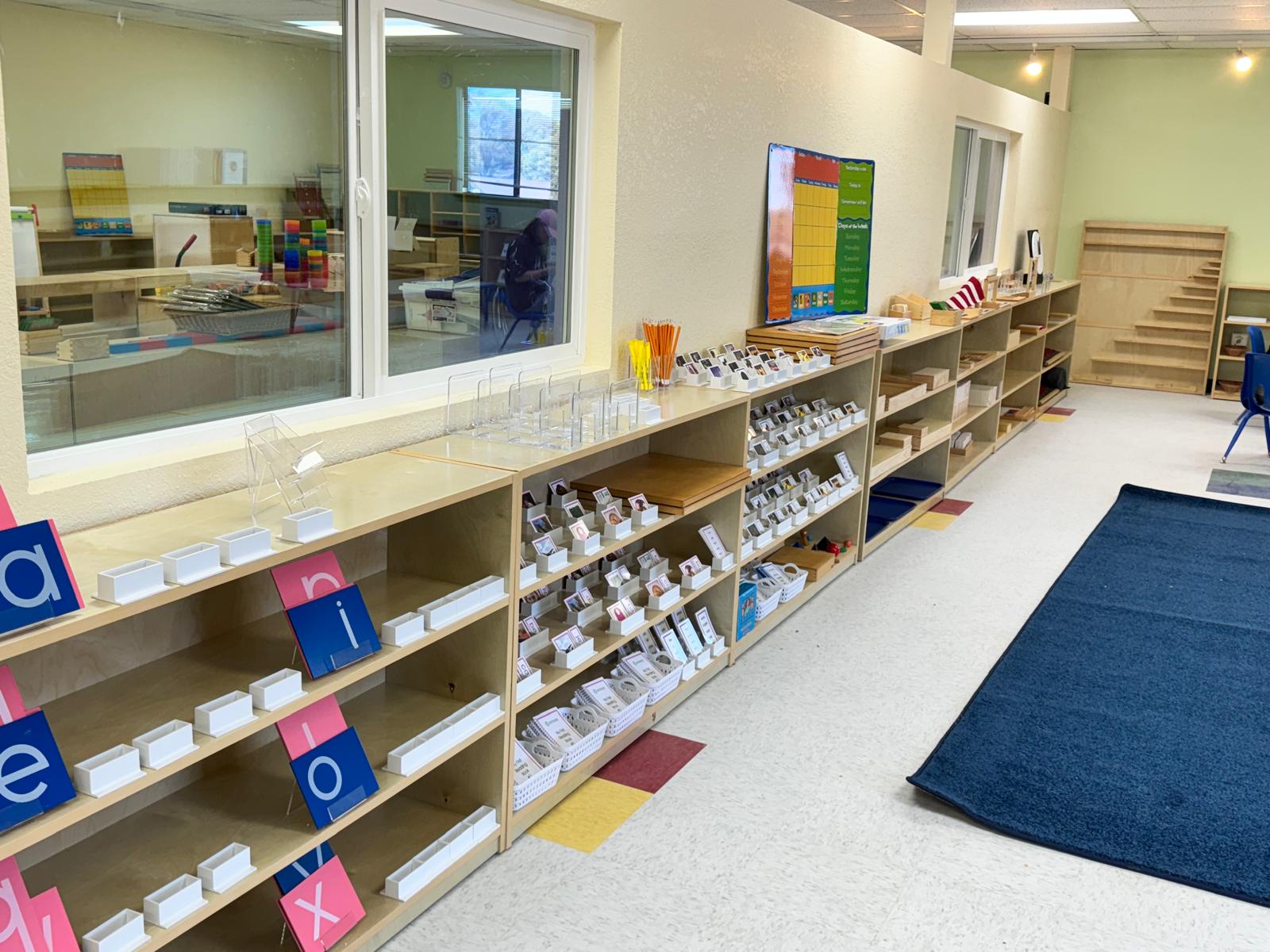
A few small adjustments can help. Consider placing a limited number of activities on low shelves, keeping frequently used belongings in predictable locations, and providing child-sized household tools where appropriate.
Keeping spaces relatively simple can also make choices more manageable. Rather than displaying every toy or activity at once, offer a smaller selection and rotate materials periodically. The goal is to create an environment where children have appropriate opportunities to make choices, participate, and do more for themselves.



No Comments Yet
Let us know what you think