Explore simple Montessori practical life activities that help toddlers build independence, confidence, coordination, and everyday life skills at home.
Toddlers are eager to be involved in the world around them. They want to carry their own cup, help prepare a snack, put things away, wash their hands, and imitate the everyday tasks they see adults doing.
In Montessori, these ordinary experiences are often called practical life activities. They give young children opportunities to develop independence while strengthening coordination, concentration, confidence, and responsibility.
Families believe that practical life learning requires expensive Montessori materials or elaborate activities, but many of the opportunities are already part of their daily routine.
Here are some simple Montessori-inspired practical life activities you can introduce at home with your toddler.
1. Let Toddlers Practice Pouring and Scooping
Pouring and transferring activities are simple ways for toddlers to practice controlling their movements.
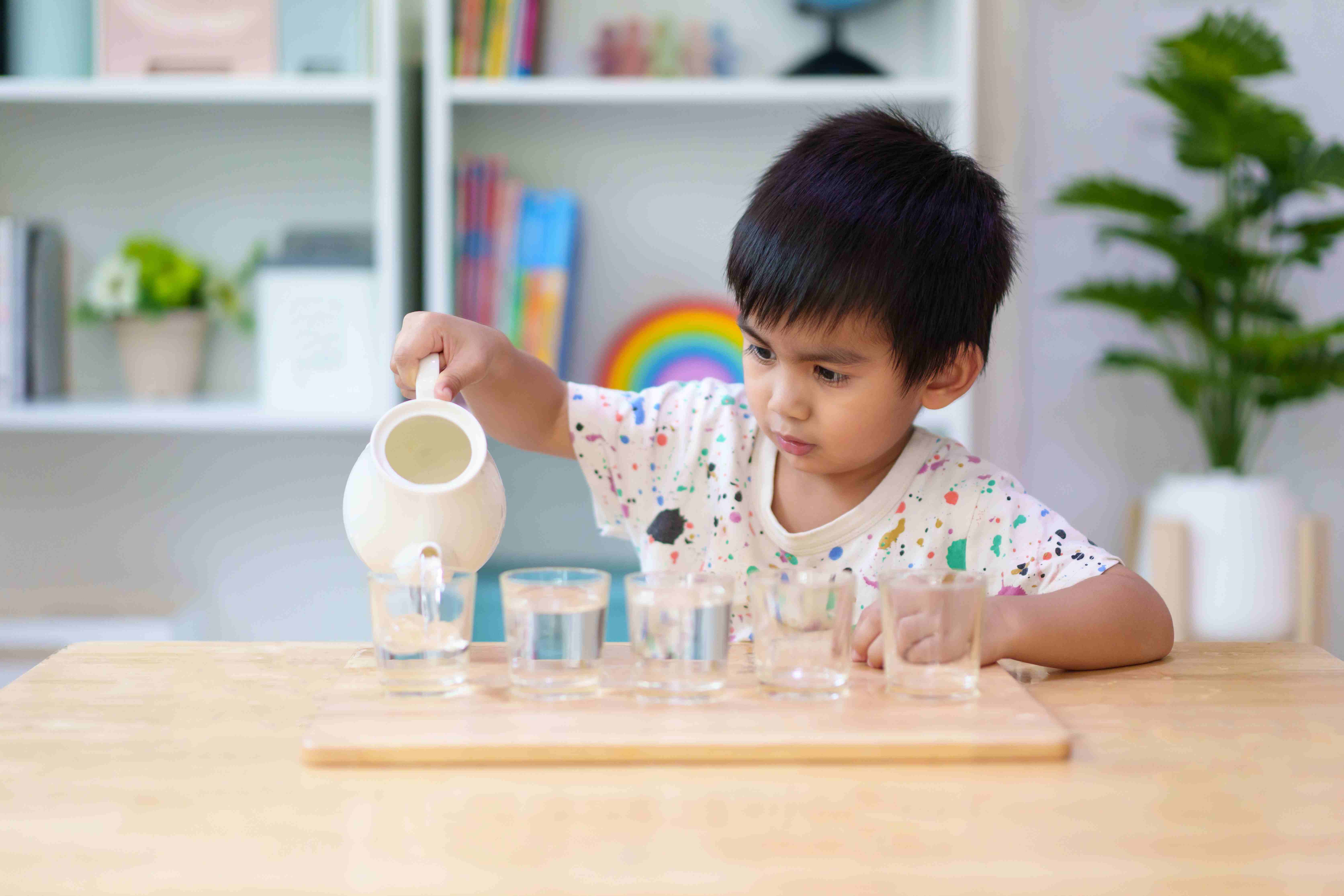
Start with manageable materials and child-friendly containers. Your toddler might pour a small amount of water from a pitcher into a cup, scoop oats from one bowl into another, or use a spoon to transfer dry pasta between containers.
As their coordination develops, these skills can become part of everyday routines. For example, a toddler might pour their own water at snack time or help measure an ingredient while cooking.
There will probably be spills along the way, and that's okay. Instead of treating a spill as a failure, show your child how to get a cloth and wipe it up. Cleaning the workspace becomes part of the activity.
What children learn: Pouring and transferring encourage concentration, hand-eye coordination, fine motor control, and growing independence.
2. Invite Them to Help With Everyday Household Tasks
Household tasks can be surprisingly engaging for young children because they allow toddlers to participate in the same work they see adults doing.
Keep a few simple cleaning tools within reach, such as a small cloth, sponge, dustpan, or child-sized broom. A toddler can wipe the table after eating, clean up a small spill, dust a low shelf, or help return toys to their proper places.
Laundry can offer practical opportunities too. Invite your toddler to match pairs of socks, place clothing into a laundry basket, or help fold simple items such as washcloths, small towels, or other cloths. At first, folding may simply mean copying an adult and attempting to bring one side of the fabric over the other. The goal isn't a perfectly folded towel, but the opportunity to practice the movement and participate in a meaningful household task.
When toddlers are regularly included in household routines, they begin to understand that caring for their belongings and shared spaces is something everyone can contribute to.
What children learn: Everyday household tasks encourage responsibility, coordination, matching and sorting skills, concentration, independence, and a sense of order.
3. Make Time for Dressing and Personal Care
Self-care routines offer practical learning opportunities throughout the day. Toddlers can practice putting on socks, slipping their feet into shoes, brushing their hair, washing their hands, or placing dirty clothes in a laundry basket. Older toddlers may also enjoy experimenting with snaps, large buttons, velcro, and zippers.
When possible, give your child enough time to attempt these tasks before stepping in. A task that takes an adult a few seconds may require several attempts for a toddler.
You can also offer limited choices, such as choosing between two shirts or two pairs of socks. This gives children some control without making the decision overwhelming.
What children learn: Dressing and self-care strengthen fine motor skills, body awareness, decision-making, persistence, and independence.
4. Give Children a Job in the Kitchen
Food preparation naturally provides many opportunities for practical life learning.
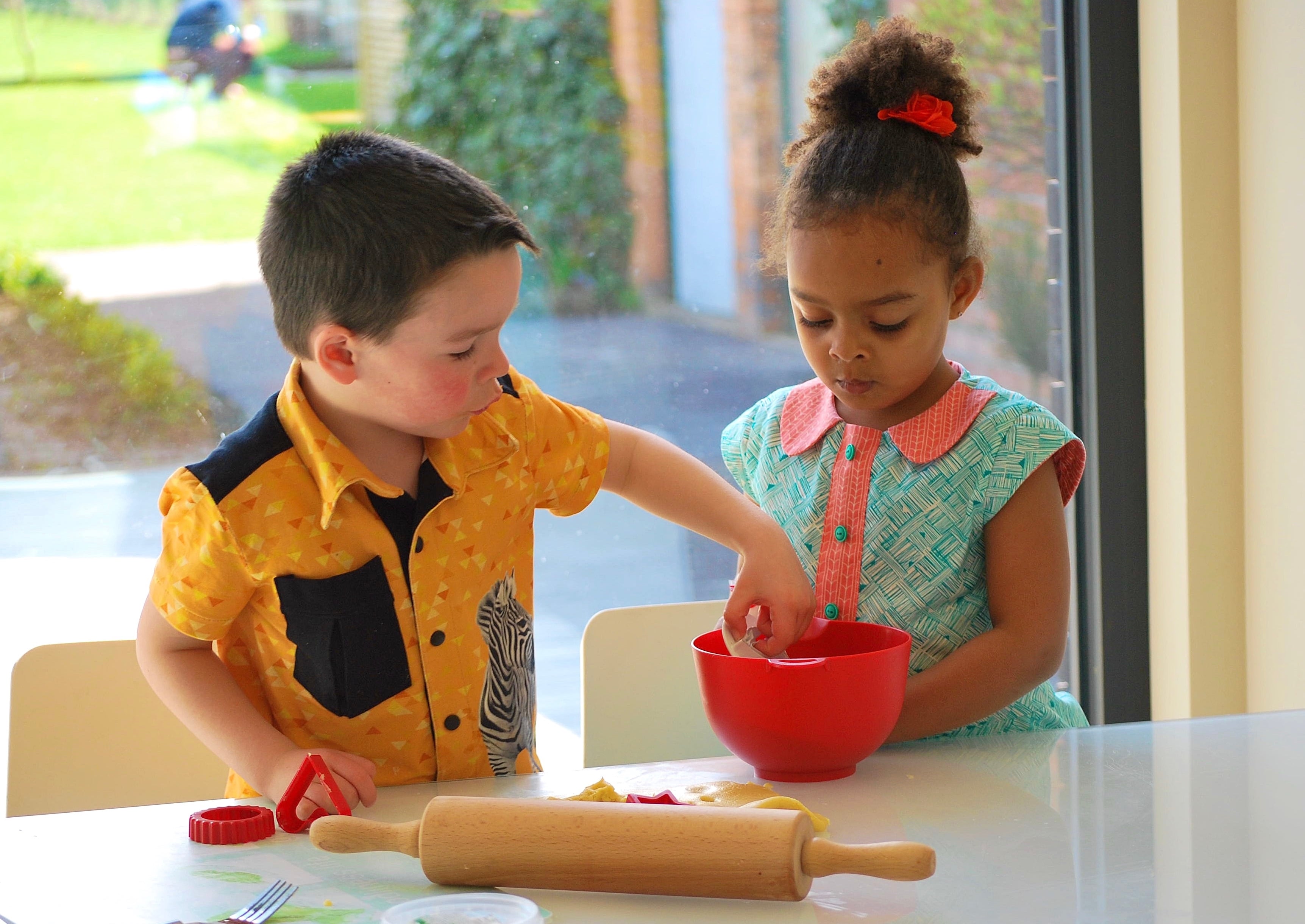
Depending on their age and abilities, toddlers can wash fruits and vegetables, tear lettuce, stir ingredients, place food onto a plate, carry napkins to the table, or put safe ingredients into a mixing bowl.
You don't need to plan a special cooking activity. Look for one small part of whatever you're already doing that your toddler can safely handle.
Even a simple responsibility, such as putting berries into a bowl for snack, can feel meaningful to a young child because they are contributing to something the family will actually use or eat. Always supervise kitchen activities closely and keep hot, sharp, or otherwise unsafe objects out of reach.
What children learn: Kitchen participation develops coordination, sequencing, fine motor skills, language, cooperation, and confidence.
5. Include Movement
Toddlers have a strong need to move, lift, carry, push, and pull. Practical life activities can give that physical energy a meaningful purpose.
Your child might carry a small basket of laundry, push a lightweight cart, bring books back to a shelf, carry groceries that are light enough for them, or move toys from one area to another.
Rather than focusing on completing the task quickly, allow your toddler to repeat the movement and discover how much force or balance is needed. Choose objects that are appropriately sized and weighted so your child can participate safely.
What children learn: Carrying, pushing, and pulling help develop gross motor coordination, balance, spatial awareness, strength, and confidence.
6. Encourage Gentle Care for Nature
Caring for plants and animals can introduce toddlers to responsibility in a calm and tangible way. A child might use a small watering can to water a houseplant, mist leaves with a spray bottle, help place seeds into soil, or assist with feeding a family pet under adult supervision.
These activities also give toddlers a chance to observe change over time. They may notice that a plant looks different after several days, that soil becomes dry, or that an animal relies on regular care.
Keeping the responsibility small and consistent makes it easier for toddlers to participate successfully.
What children learn: Caring for living things can nurture empathy, patience, observation skills, gentleness, and an early understanding of cause and effect.
7. Create a Home Environment That Encourages Independence
Practical life learning becomes easier when toddlers can safely access some of the things they use every day.
Consider arranging a few frequently used belongings at your child's height. A low hook can hold their jacket, a small basket can store shoes, and an accessible shelf can hold a limited selection of toys or books.
You might also create designated places for everyday items. When children know where their belongings belong, they have a better chance of getting and returning them without relying on an adult each time. You don't need to redesign your entire home. Small adjustments can make everyday routines much more manageable for young children.
What children learn: An accessible, predictable environment supports autonomy, organization, decision-making, and confidence.
8. Give Toddlers Time to Finish
One of the simplest ways to support practical life learning doesn't involve adding another activity at all, give your child time.
Young children naturally work at a different pace than adults. Putting on a shoe, carrying a plate, or wiping a table may take considerably longer when they're learning how to do it themselves.
When the schedule allows, resist the urge to immediately take over. Offer help when it's needed, but leave room for your child to experiment, make adjustments, and try again.
Those extra minutes can turn an ordinary routine into a valuable learning experience.
What toddlers learn: Having time to complete tasks encourages concentration, perseverance, problem-solving, and trust in their own abilities.
Bringing Montessori Practical Life Into Everyday Routines
Montessori practical life activities don't have to look like formal lessons. For toddlers, some of the most meaningful learning happens while participating in ordinary family life.
Pouring a drink, putting shoes away, washing vegetables, watering a plant, or wiping up a spill may seem like small tasks to an adult. For a toddler, however, they offer opportunities to practice important physical, cognitive, and social skills.
Start with one or two responsibilities that fit naturally into your family's routine. Keep expectations appropriate for your child's age, provide supervision when necessary, and remember that the process matters more than doing the job perfectly.
By giving toddlers regular opportunities to participate, families can help children experience the satisfaction of contributing, solving problems, and gradually doing more for themselves. Over time, these everyday experiences can become an important foundation for independence, confidence, and a lifelong willingness to learn through doing.



No Comments Yet
Let us know what you think